Our comprehensive guide helps healthcare professionals choose the right serums and solutions. Discover types, selection criteria, standards (CE, ISO 13485), and management tips to ensure patient safety and compliance.
How to choose medical serums and solutions correctly? The guide for professionals
The choice of your medical serums and solutions is crucial for patient safety, treatment effectiveness, and your regulatory compliance. This guide has been designed for buyers, pharmacists, and department managers to give you the keys to an informed selection, from product types to standards to be met, including logistical management.
What are the different types of serums and solutions?
To choose well, you must first identify the clinical need. Each solution has a precise composition and purpose, whether it's a simple rinse or a complex infusion. Adherence to the indication is imperative for patient safety.
The main families of medical solutions
Here are the main categories that every professional must master:
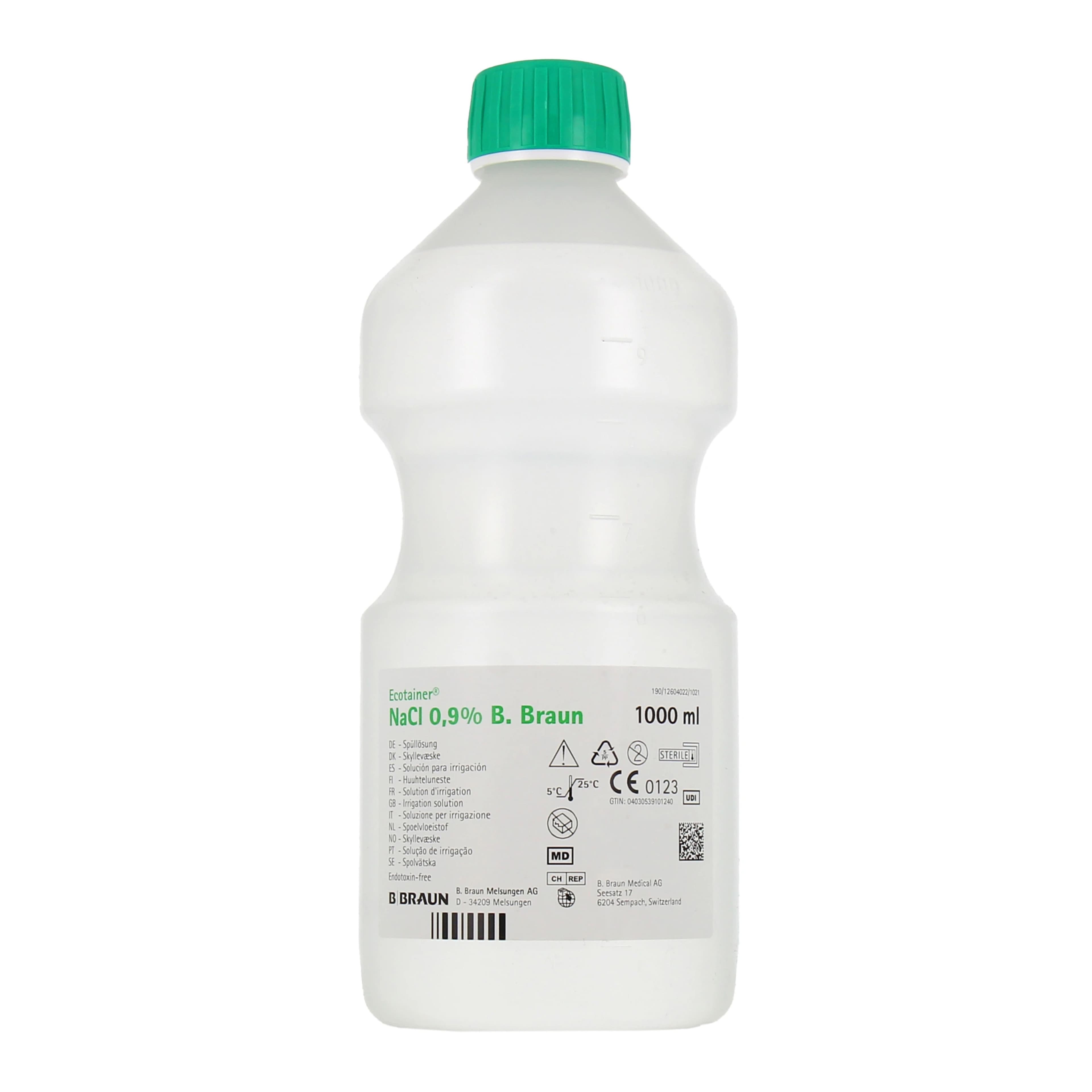
- Physiological saline (0.9% NaCl solution): This is the most versatile solution. Isotonic, it is used for wound cleaning, nasal and ocular hygiene, nebulization, and as a diluent for medications. Its excellent tolerance makes it essential.
- Infusion solutions: Intended for intravenous administration, they allow rehydration, electrolyte balance, administration of nutrients, or medications. Their sterility, apyrogenicity, and exact composition are absolute requirements.
- Antiseptic solutions: Containing agents like chlorhexidine or povidone-iodine, they are used to disinfect healthy skin before an invasive procedure or to treat infected wounds. Their use is strictly external.
- Rinsing and irrigation solutions: Offered in large volumes (500 ml, 1 L), these sterile solutions (water or physiological saline) are used to mechanically clean extensive wounds or surgical cavities without introducing contaminants.
What technical criteria should you base your selection on?
Rigorous selection relies on objective criteria ensuring safety and compliance. Beyond the type of solution, evaluate sterility, physicochemical parameters, and packaging, which must be adapted to the use to prevent any risk of contamination.
Sterility and packaging integrity: the non-negotiable criterion
For injectable solutions or those in contact with damaged tissues, sterility is vital. It is guaranteed by the mention "STERILE", a validated sterilization method, and, above all, the perfect integrity of the packaging. Any suspicious container (crack, leak, broken seal) must be immediately discarded.
Physicochemical parameters: Concentration, pH, and Osmolarity
These parameters ensure the compatibility of the solution with bodily fluids. An isotonic solution like physiological saline (0.9% NaCl) has an osmolarity close to that of plasma, minimizing the risk of irritation. A neutral pH is also sought for most applications.
Packaging: a strategic choice for safety
The container must be adapted to the care protocol to prevent infections:
- Unit doses (5 ml, 10 ml): Ideal for individual care with a high risk of contamination (eye, infant). Single use eliminates the risk of cross-contamination.
- Bottles and containers (250 ml, 500 ml, 1 L): More economical for multiple uses on the same patient (wound cleaning). Their use requires strict asepsis and adherence to the shelf life after opening (CAO).
- Flexible bags: Reserved for infusion, they empty by gravity without air intake, limiting the risks of air embolism and contamination.
Comparative table of physiological and irrigation solutions
Here is a comparison of products to illustrate these criteria according to their uses.
| Product | Solution Type | Guaranteed Sterility | Available Packaging | Main Indicated Uses | CE Marking |
|---|---|---|---|---|---|
| Bornova - Physiological Saline Unit Dose | NaCl 0.9% | Yes (STERILE) | Dose / Unit Dose 5 ml | Nose (ENT), Eyes (ocular) | Yes |
| B Braun - Physiological Saline | NaCl 0.9% | Yes (STERILE) | Bottle 250 ml, 500 ml, 1 L | Nose (ENT), Wounds | Yes |
| Plastipur - Physiological Saline | NaCl 0.9% | Yes (STERILE) | Bottle 500 ml, 1 L | Nose (ENT), Wounds, Eyes (ocular) | Yes |
| Versol - Sterile Water for Irrigation | Sterile Water | Yes (STERILE) | Bottle 500 ml, 1 L | Wounds, General Use (irrigation) | Yes |
What standards and certifications should you check?
Certifications ensure that the product meets strict safety and performance controls. They protect your patients, your staff, and the legal liability of your establishment.
- CE Marking: Mandatory in Europe, it certifies the product's conformity with the Medical Devices Regulation (MDR 2017/745). It guarantees a high level of safety, validated by a notified body.
- ISO 13485 Standard: This international standard targets the quality management system of medical device manufacturers. It proves their ability to consistently supply compliant products.
The imperative of traceability
Traceability is essential for health safety. Each product must bear a unique lot number allowing its production cycle to be traced in case of an incident. This is a pillar of materiovigilance.
How to adapt the choice to your practice (clinic, pharmacy)?
The ideal product depends on your care environment. Analyze your most common procedures to choose the safest, most practical, and most economical packaging.
For a retail pharmacy or a pediatric practice
Unit doses of physiological saline are essential for nasal and ocular hygiene in infants. Their single-use format guarantees perfect asepsis and great ease of use for parents.
For a medical office or a nursing clinic
250 ml or 500 ml bottles of physiological saline offer the best compromise. Versatile for wound cleaning or dressing preparation, they are economical for repeated uses, provided strict hygiene protocols are followed.
For an emergency department or an operating room
Large volumes (1 L) of sterile water or physiological saline are essential for abundant irrigation of traumatic wounds, burns, or surgical sites. Sterility and container robustness are priorities here.
What are the 4 mistakes not to make?
Certain purchasing errors can have serious consequences, from waste to health risks. A rigorous approach helps to avoid them.
- Neglecting certifications: Buying products without valid CE marking or without ISO 13485 certification exposes your establishment to legal and health risks.
- Choosing packaging unsuitable for use: Using a large bottle for ocular care increases the risk of infection. Conversely, unit doses for surgical irrigation are costly and impractical.
- Confusing purchase price and total cost: A low price can hide a short expiration date or an unreliable supplier. Evaluate cost-effectiveness by integrating safety, logistics, and waste management.
- Ignoring material compatibility: Some solutions may be incompatible with your medical equipment. Always check the equipment manufacturer's recommendations.
How to optimize your stock management?
Good logistics ensures product availability without overstocking. The key: mastering expiration dates and choosing a reliable partner for fast deliveries.
- Apply the FIFO (First-In, First-Out) method: Store products in such a way that those with the closest expiration date are used first to minimize losses.
- Anticipate your consumption: Analyze your order history to define safety stock levels and anticipate seasonal peaks (e.g., physiological saline in winter).
- Choose a reliable distributor: A partner like Bornova guarantees complete traceability, compliant products, and a robust supply chain to meet your needs, even urgent ones.
Bornova: your partner for quality supply
As a specialized B2B distributor, Bornova understands your requirements. We are committed to supplying serums and solutions that comply with the highest quality standards, with logistics designed for healthcare professionals.
Trusting Bornova means choosing:
- A selection of certified products: All our products bear the CE marking and come from manufacturers complying with standards such as ISO 13485.
- A range adapted to all needs: From sterile unit doses to large volume bottles, we cover all use cases for pharmacies, clinics, and hospitals.
- Efficient logistics: We ensure flawless traceability and fast deliveries to help you optimize your stock management.
Frequently Asked Questions
What sterility criteria should be checked for serums and solutions?
Always check 3 points: the mention "STERILE", the integrity of the packaging (no defects, intact seal), and the expiration date. Damaged packaging or an expired date means the product must be discarded.
How to choose between different packaging for serums and solutions?
Prefer unit doses for high-risk infectious uses (eye, infant) or mobile uses. Bottles are more economical for repeated uses on the same patient, provided strict hygiene rules are followed after opening.
What are the risks associated with using non-compliant products?
The risks are major: nosocomial infections, adverse reactions, ineffectiveness of care. They also engage the legal and professional responsibility of your establishment and healthcare personnel.
How to evaluate the value for money of serums and solutions?
Do not rely solely on the unit price. Evaluate the total cost, which includes compliance (CE, ISO), shelf life, supplier reliability, and packaging quality. Patient safety is the most important criterion.