
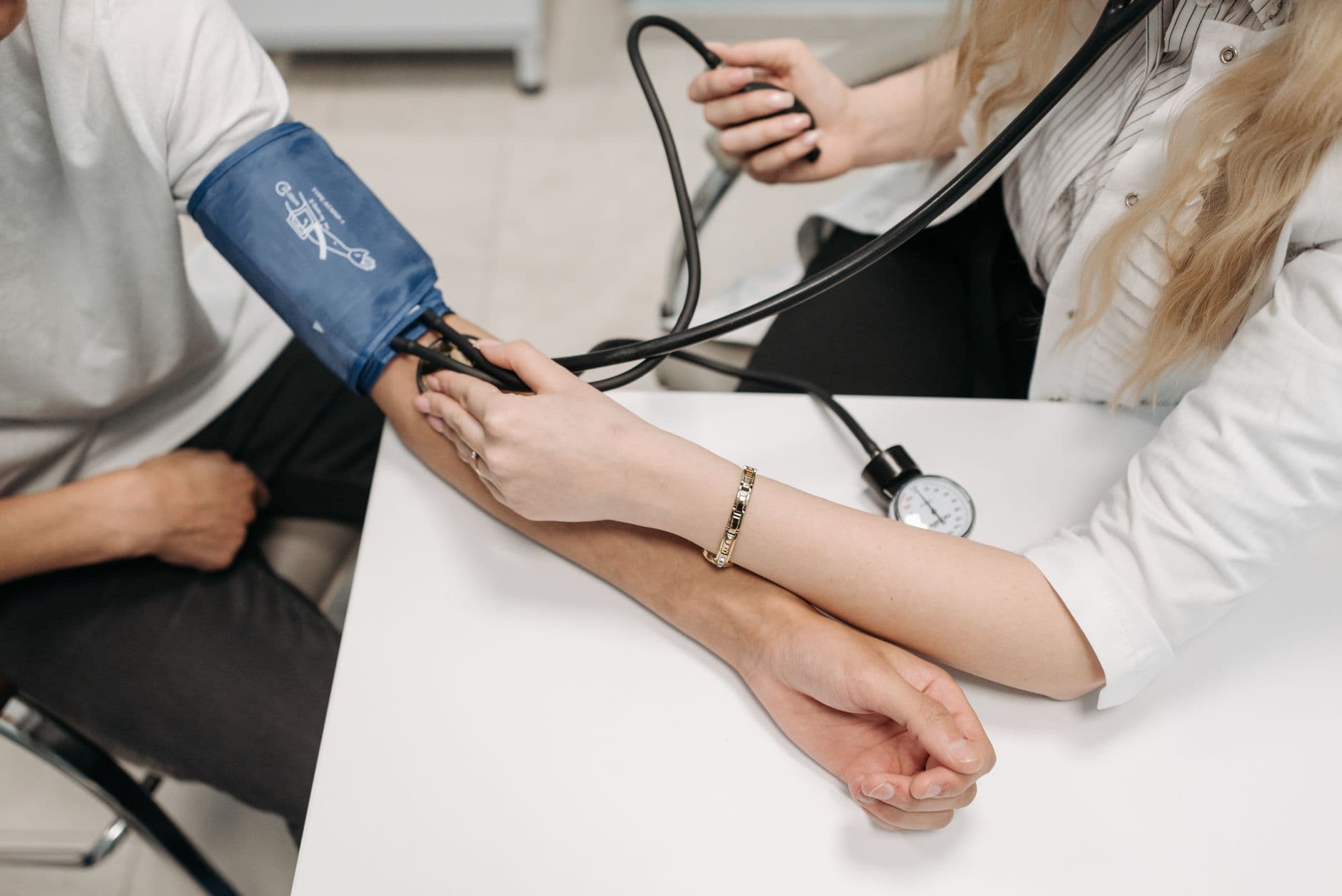
A guide for healthcare professionals: master blood pressure measurement. Protocol, common errors, self-measurement, ABPM, and choosing a sphygmomanometer.
Blood Pressure Measurement: A Reference Guide for Healthcare Professionals
Reliable blood pressure (BP) measurement is crucial for diagnosing and monitoring arterial hypertension (HTN). As a healthcare professional, mastering the protocol and understanding common errors ensure the validity of results and the relevance of your therapeutic decisions. This guide details best practices, sources of error, and criteria for choosing blood pressure monitors.
Clinical and Diagnostic Stakes of Reliable Measurement
Accurate blood pressure measurement is fundamental to avoid diagnostic errors with serious consequences. Reliable data are essential for diagnosing HTN, assessing cardiovascular risk, and ensuring effective monitoring. Erroneous measurements can lead to:
- Over-diagnosis: This leads to unnecessary antihypertensive treatments, exposing patients to side effects and generating avoidable costs.
- Under-diagnosis: This deprives at-risk patients of necessary care, increasing their risk of major cardiovascular events (heart attack, stroke).
The reliability of data is therefore non-negotiable for patient safety and the optimization of therapeutic strategies.
Mastering the Measurement Protocol: Eliminating Sources of Error
Many measurement errors, often simple to correct, can skew results. They stem from four main sources: patient preparation, environment, equipment, and technique. Identifying and correcting them is imperative.
Patient and Environmental Factors
The patient and their environment are major sources of BP variation. Consultation stress ("white coat" effect), recent physical activity, caffeine consumption, or a full bladder can artificially increase blood pressure. Talking during measurement can raise it by more than 10 mmHg[S4].
- Prior rest: The patient should be seated at rest for 5 to 10 minutes. They should not have smoked, consumed caffeine or alcohol, or exercised in the preceding 30 minutes.
- Correct position: The patient should be seated comfortably, with their back straight and supported, feet flat on the floor, legs uncrossed. The arm should be bare, supported at heart level. The bladder should be emptied before measurement[S4].
- Quiet environment: Measurement should be performed in a quiet room at a moderate temperature. All conversation should be avoided during the procedure to prevent altering results[S4].
Equipment and Technique Factors
Inappropriate equipment or approximate technique are major causes of inaccurate measurements. The most frequent error is using an inadequately sized cuff: too small, it overestimates BP; too large, it underestimates it. A poorly calibrated device, a misplaced cuff, or too rapid deflation also skew values.
Summary Table of Common Errors and Their Impact
This decision tool summarizes the main sources of technical errors and their correction, in accordance with health authority recommendations, for daily use in consultation.
| Potential Source of Error | Estimated Impact on BP Measurement | Corrective Best Practice |
|---|---|---|
| Patient talking or listening | Increase of 10 mmHg[S4] | Maintain silence during measurement. |
| Arm not supported at heart level | Increase up to 10 mmHg | Support the arm so that the middle of the cuff is at heart level. |
| Back and feet unsupported | Increase in diastolic by 6 mmHg | Seat the patient with their back supported, feet flat on the floor. |
| Crossed legs | Increase of 2 to 8 mmHg | Uncross legs. |
| Cuff too small | Overestimation of 2 to 10 mmHg | Choose a cuff appropriate for arm circumference (bladder covering 80% of circumference). |
| Full bladder | Increase of 10 mmHg[S4] | Ask the patient to empty their bladder. |
| Measurement over clothing | Unpredictable and often erroneous results | Place the cuff on the bare arm. |
Standardized Measurement Protocol in Consultation: Step-by-Step Procedure
To ensure the reliability of results, follow this standardized measurement protocol in consultation:
- Patient preparation: Ensure 5-10 minutes of quiet rest. Verify that conditions are met (empty bladder, no stimulants).
- Cuff selection: Measure arm circumference and select the appropriate cuff size.
- Positioning: Position the patient (seated, back supported, feet on the floor, legs uncrossed) and place the cuff on the bare arm, at heart level.
- Taking measurements: Perform three consecutive measurements, spaced one to two minutes apart.
- Result calculation: Discard the first measurement and average the last two. This average is the BP value to retain.
Diagnostic Confirmation Tools: Self-Measurement (SMBP) and ABPM
In-office measurement is not always sufficient. To confirm an HTN diagnosis and evaluate treatment, self-measured blood pressure (SMBP) and Ambulatory Blood Pressure Monitoring (ABPM) are two indispensable complementary tools.
Self-Measured Blood Pressure (SMBP): Involving the Patient for Reliable Diagnosis
Self-measured blood pressure (SMBP) is essential to confirm suspected HTN and overcome the "white coat" effect. Recommended by the Haute Autorité de Santé (HAS), it provides data more representative of the patient's usual BP[S5]. The protocol to teach the patient is the "rule of 3":
- 3 measurements in the morning before breakfast and medication.
- 3 measurements in the evening before bedtime.
- All for 3 consecutive days.
Ambulatory Blood Pressure Monitoring (ABPM): The 24-Hour Reference Method
ABPM is the reference method for a complete 24-hour BP analysis[S6]. A portable device records blood pressure every 15 to 30 minutes, offering a precise view of diurnal and nocturnal variations, impossible to obtain with single measurements. ABPM is particularly indicated for:
- Confirming an HTN diagnosis.
- Detecting "white coat" HTN or masked HTN (normal BP in office but elevated outside).
- Evaluating the response to antihypertensive treatment over 24 hours.
- Analyzing the nocturnal BP profile, an important cardiovascular prognostic marker.
Selection and Maintenance of Professional Blood Pressure Monitors: A Matter of Quality and Compliance
The choice and maintenance of blood pressure monitors are key responsibilities that impact the quality of care in any healthcare facility.
Criteria for Choosing a Professional Sphygmomanometer
To ensure quality of care, the selection of a professional blood pressure monitor must be based on objective reliability criteria[S7]:
- Clinical validation: Choose a device validated by a recognized international protocol (e.g., ESH-IP, AAMI) and listed by scientific societies.
- Regulatory compliance: Verify that the device bears the CE mark and complies with the Medical Device Regulation (MDR).
- Cuff range: Ensure that the supplier offers a complete range of cuff sizes to cover all needs (pediatric, adult, large).
For optimal management of your equipment fleet, a good B2B medical procurement guide can be useful.
Maintenance, Calibration, and Traceability of Equipment Fleet
As the accuracy of a blood pressure monitor decreases over time, regular maintenance is imperative to ensure the reliability of measurements:
- Periodic calibration: Have the accuracy of each device checked and adjusted according to the manufacturer's recommendations (generally every 1 to 2 years).
- Traceability: Maintain a maintenance and calibration log for each device. This quality approach is essential, as highlighted by the WHO[S8].
Frequently Asked Questions
What patient-related factors can skew a blood pressure measurement?
The main factors are stress ("white coat" effect), recent physical activity, consumption of caffeine, alcohol, or tobacco in the preceding 30 minutes, a full bladder, or talking and moving during the measurement[S4].
How to choose the correct cuff size for an accurate measurement?
Measure the patient's arm circumference. The inflatable bladder of the chosen cuff should cover approximately 80% of this circumference. An unsuitable cuff is a major source of error: too small, it overestimates BP; too large, it underestimates it.
What are the key steps for correct self-measured blood pressure at home?
Self-measurement (SMBP) follows the HAS "rule of 3": 3 measurements in the morning (before breakfast and medication) and 3 measurements in the evening (before bedtime), for 3 consecutive days. The patient should be at rest for 5 minutes, seated, calm, without talking or moving[S5].
How is ABPM different from in-office measurement and when is it recommended?
ABPM continuously records BP over 24 hours, offering a complete view of diurnal and nocturnal variations, unlike single in-office measurements. It is recommended to confirm HTN, detect a "white coat" effect or masked HTN, and evaluate treatment effectiveness[S6].
What are the criteria for evaluating the reliability of a professional blood pressure monitor?
A reliable blood pressure monitor must have clinical validation (ESH-IP, AAMI protocols), bear the CE mark, and comply with the MDR. It is also crucial to choose devices listed by scientific societies and ensure regular calibration with rigorous maintenance traceability[S7].
Sources
- Annexe 6 - Sources erreur prise PA PPSPRhas-sante.fr
- Fiche Mémo - Prise en charge de l’hypertension artérielle de l’adultehas-sante.fr
- Pratique de la mesure ambulatoire de la pression artérielle à ...pmc.ncbi.nlm.nih.gov
- Tension artérielle et sphygmomanomètres à mercureec.europa.eu
- [PDF] Bonnes pratiques de réglementation des produits médicauxcdn.who.int
Continue reading
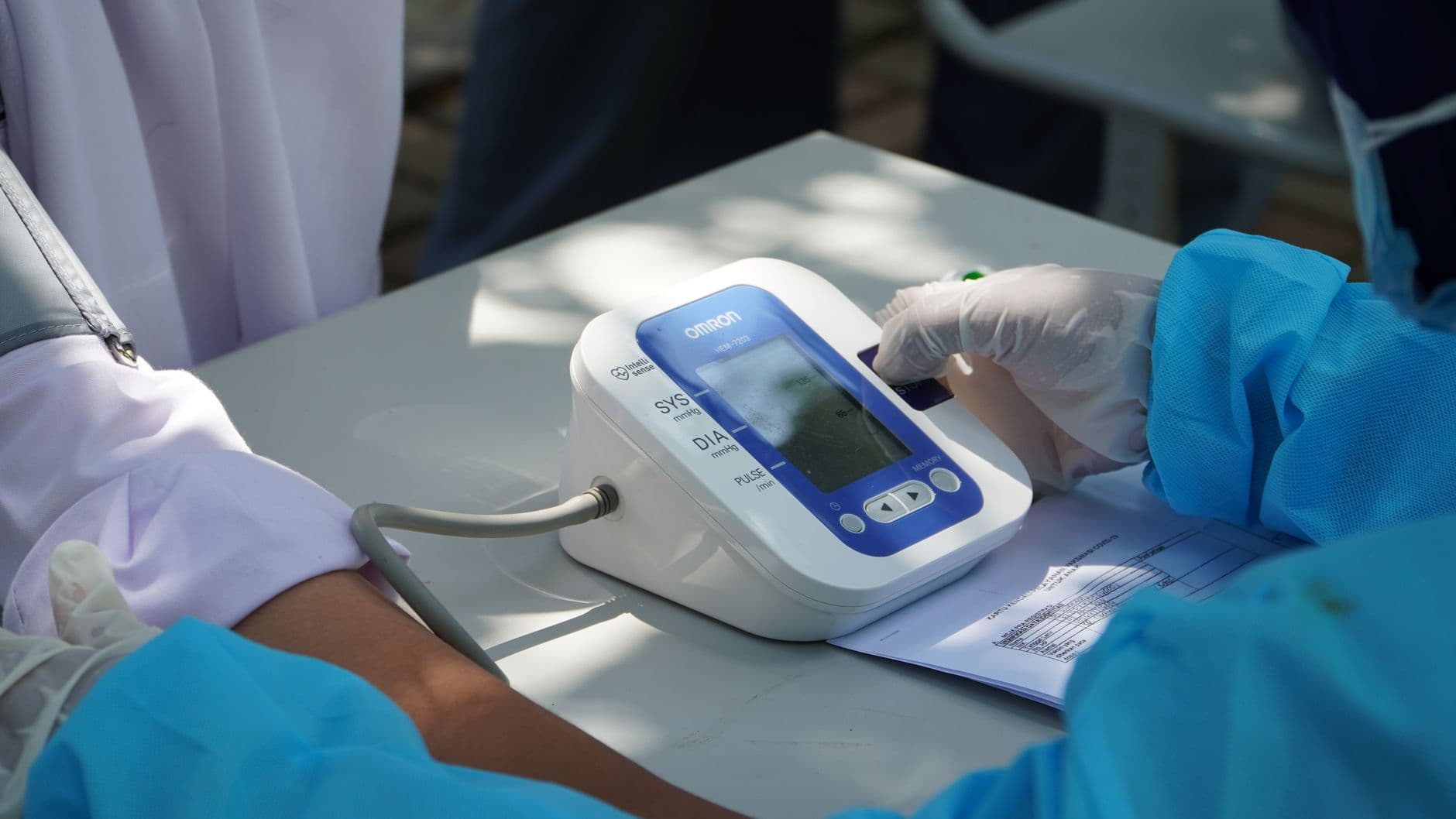
 Incontinence
Incontinence: A Purchasing Guide for Clinics and Pharmacies
A practical guide for clinic and pharmacy buyers. Discover how to choose the right incontinence devices by balancing clinical needs, regulatory compliance, and logistical efficiency to improve care quality.
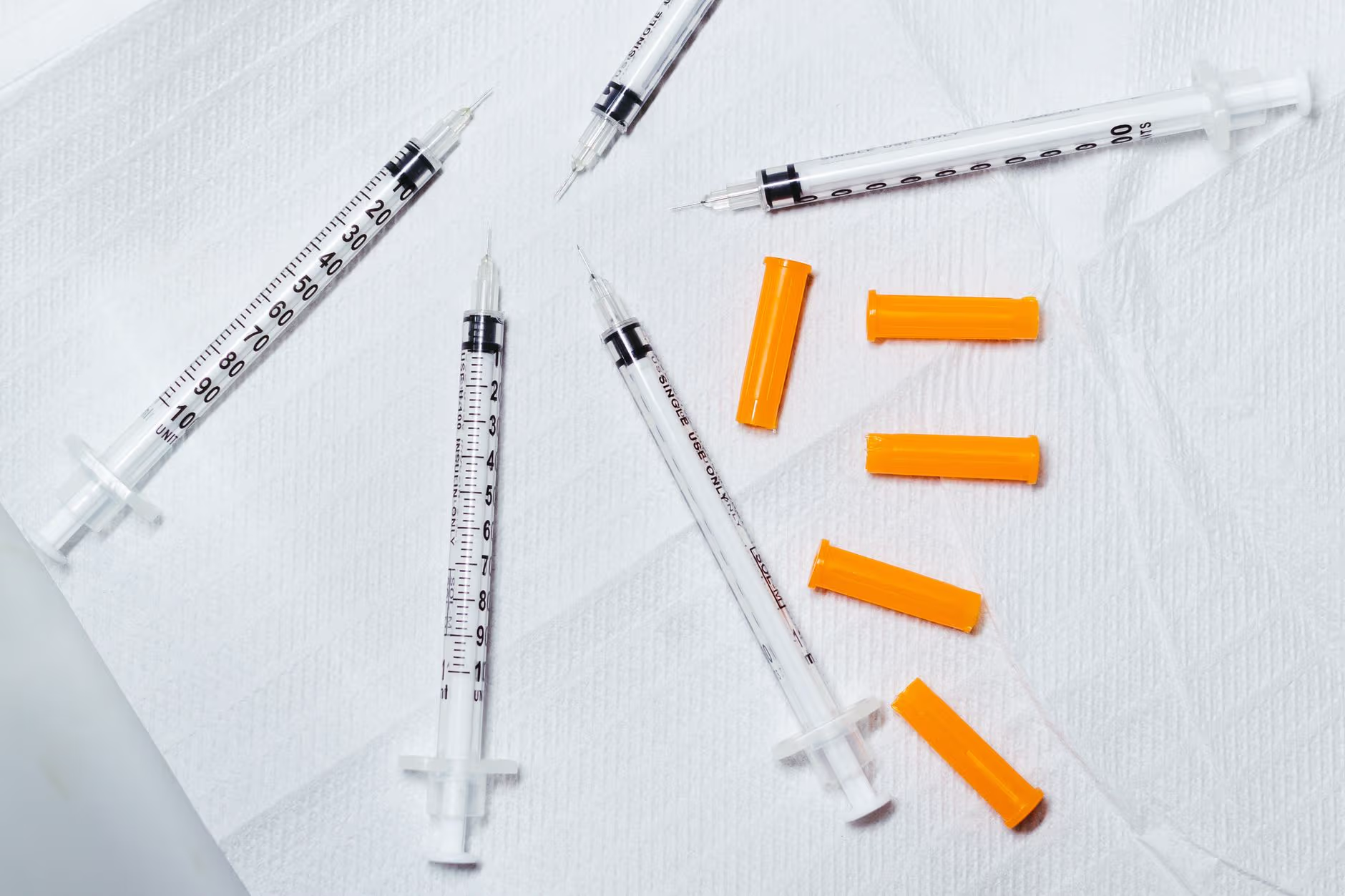 Seringue
Syringes: Comparative Guide and Selection Criteria for Healthcare Professionals
The complete guide to choosing the right medical syringe for your needs. Technical comparison (Luer Lock, Luer Slip, 2/3 parts), standards, and advice to optimize your costs and secure your supplies.