

The complete guide to choosing the right medical syringe for your needs. Technical comparison (Luer Lock, Luer Slip, 2/3 parts), standards, and advice to optimize your costs and secure your supplies.
Medical Syringe Selection Guide: A Strategic Decision for Professionals
The choice of a syringe in a medical setting is a strategic decision that directly impacts patient safety, dosage accuracy, care effectiveness, and cost optimization. This guide is designed to help professional buyers and healthcare managers (clinics, pharmacies) select the most suitable equipment based on technical, regulatory, and economic criteria.
The Strategic Importance of Syringe Selection in a Professional Environment
Choosing the right syringe is crucial because it directly influences patient safety, treatment effectiveness, and institutional budgets. Appropriate selection minimizes waste of expensive medications, ensures precise dose administration, and prevents errors. As demonstrated by the Covid-19 vaccination campaign, the type of syringe, especially those with low dead space, can have major economic and organizational consequences by optimizing the number of doses drawn per vial [S2].
The syringe is at the heart of care safety. An unsuitable tip, imprecise volume, or incompatible material can compromise treatment. For buyers and managers, thoughtful syringe procurement is therefore a lever for clinical and financial performance, ensuring that caregivers always have the appropriate equipment.
Different Types of Syringes and Their Technical Specificities
Syringes are mainly distinguished by their design (2 or 3 parts), their tip type (Luer Slip, Luer Lock), and their specific use (insulin, tuberculin). Each model meets precise needs in terms of connection security, dosage accuracy, and ease of use. Knowing these specificities is essential to select the most suitable device for the medical act.
2-Part vs. 3-Part Syringes: A Question of Fluidity
The main difference lies in the plunger: the 3-part syringe has a rubber gasket that the 2-part syringe does not. This gasket ensures superior sealing and smoother, more consistent gliding, which is essential for injecting viscous substances or for very precise flow control, especially with an electric syringe pump.
Tips: Luer Slip vs. Luer Lock, a Safety Issue
The choice of tip is crucial for connection safety and the prevention of accidental exposures.
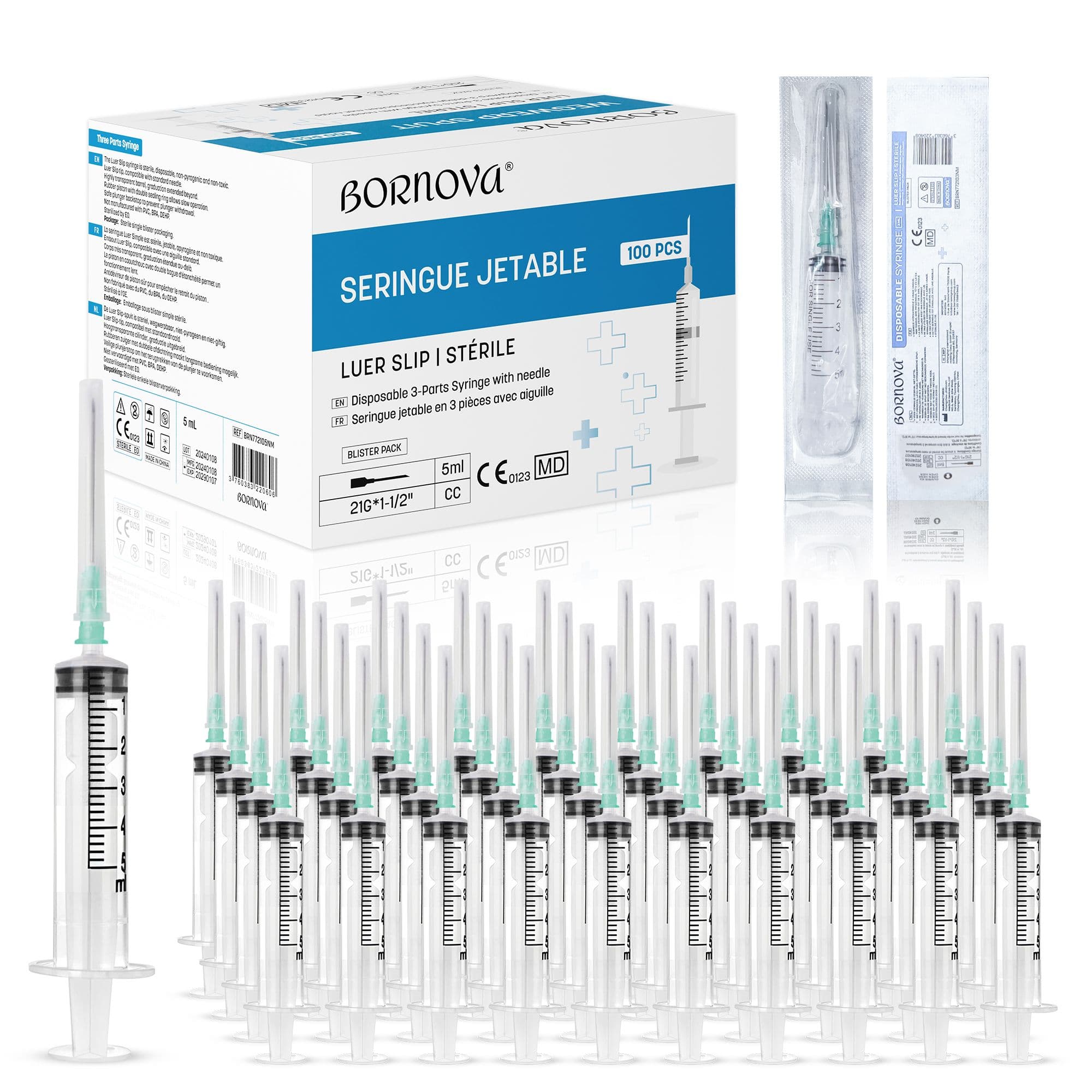
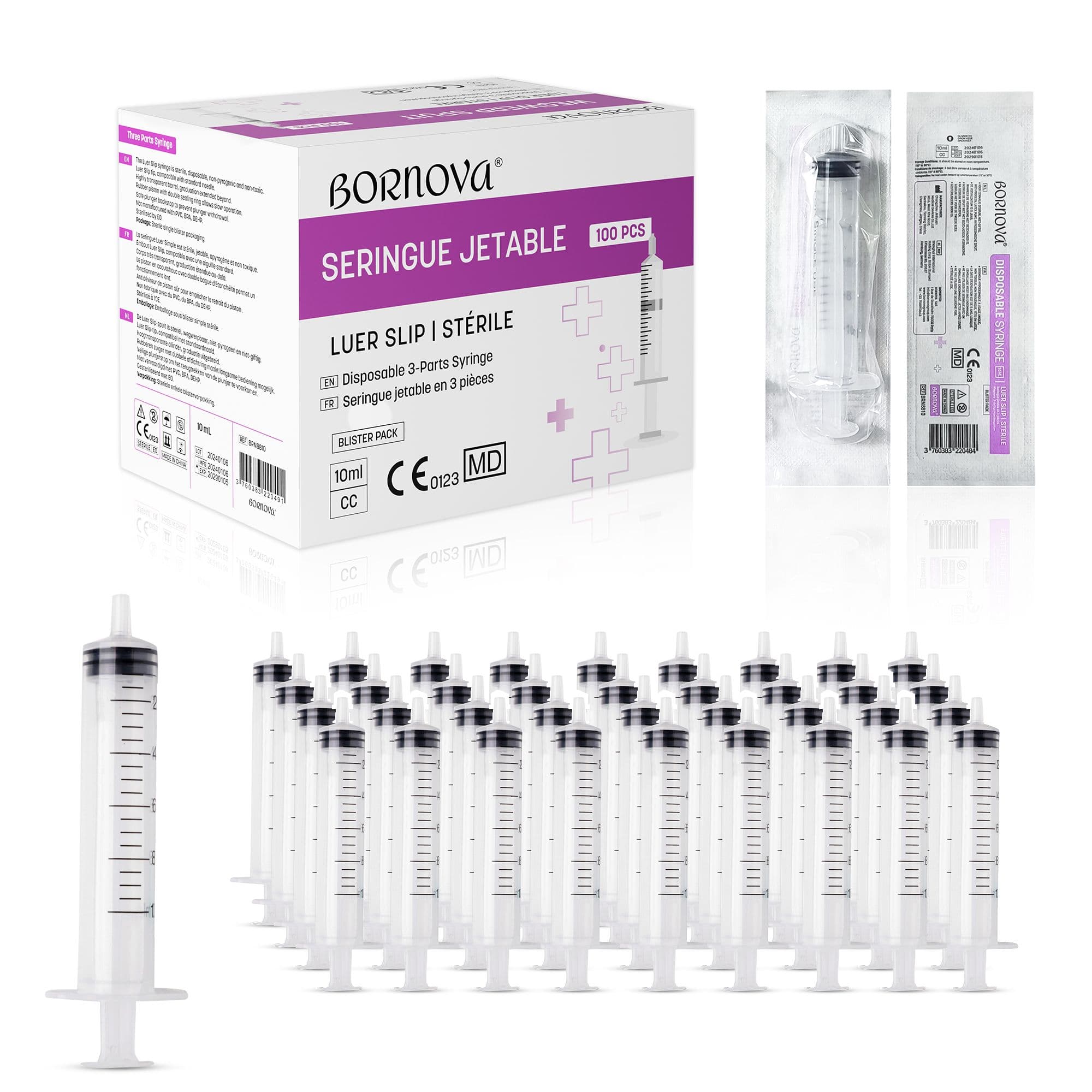
- Luer Slip (or simple Luer): The needle attaches by simple pressure. Quick and economical, this system is suitable for simple injections (intramuscular, subcutaneous) where the pressure exerted is low.
- Luer Lock: The threaded tip allows the needle to be firmly screwed on for a tight and secure connection. It is imperative for high-pressure injections, continuous infusions, or the administration of dangerous medications (chemotherapy), as it prevents any risk of disconnection and leakage.
Specialized Syringes for Dedicated Applications
Certain clinical applications require syringes with specific characteristics to ensure safety and precision.
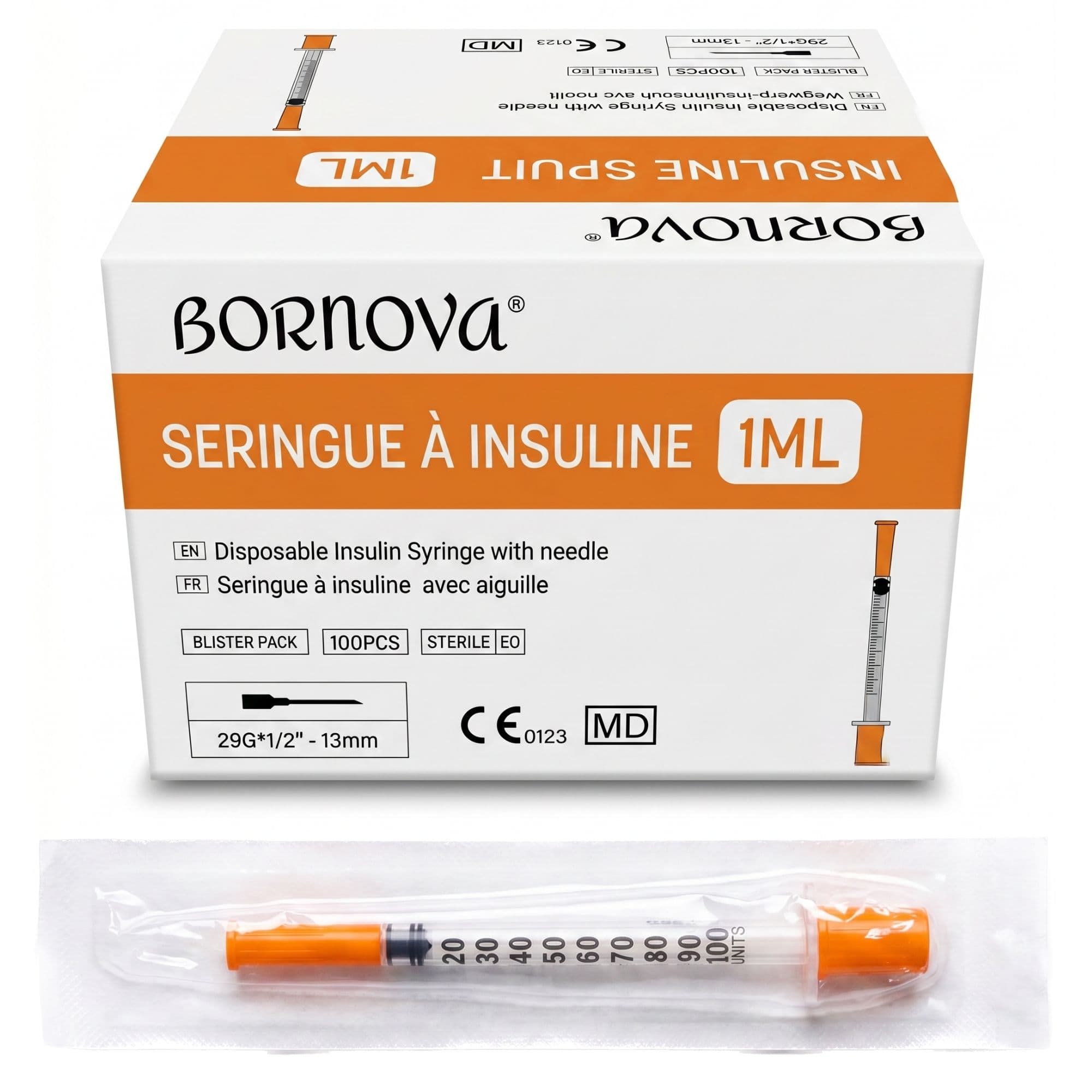
- Insulin Syringe: Graduated in International Units (UI) and not in milliliters (ml) to avoid conversion errors, it is designed for insulin administration. It generally has a very fine and short needle, integral with the body, to minimize pain.
- Tuberculin Syringe: With a small volume (generally 1 ml), its fine graduations offer high reading precision, essential for injecting very small quantities of substance (skin tests, pediatrics).
- Pre-filled Syringe: Containing a single dose of ready-to-use medication, it saves time and reduces the risk of error or contamination. It may require vigorous shaking to homogenize a suspension and avoid underdosing [S4].
- Syringe for Electric Syringe Pump (PSE): Designed for use with a pump, it allows continuous and controlled administration of medications. The Haute Autorité de Santé (HAS) strongly recommends standardizing their preparation and labeling to secure infusions [S3].

Essential Selection Criteria for Healthcare Professionals
The choice of a syringe is based on a multi-criteria analysis: volume, tip type, material, sterility, and compatibility with the needle. These factors must be evaluated according to the medication, injection route, and patient to ensure a safe and compliant act.
Comparative Table of Syringe Types for Professional Applications
| Characteristic | Luer Slip Syringe (BORNOVA) | Insulin Syringe (BORNOVA) | Luer Lock Syringe | Pre-filled Syringe |
|---|---|---|---|---|
| Tip Type | Luer Slip (friction connection) | Fixed needle (non-detachable) | Luer Lock (threaded connection) | Device-specific |
| Available Volumes | 3 ml, 5 ml, 10 ml | 0.5 ml, 1 ml (graduated in UI) | Variable (e.g., 1 ml to 60 ml) | Fixed single dose |
| Needle | Without needle or mounted (e.g., 21G) | Fixed and integrated (e.g., 29G) | Not included (separate choice) | Integrated and specific |
| Key Certifications | CE, BPA_FREE | CE, STERILE | CE (to be verified by supplier) | CE (to be verified by medication) |
| Main Use | Standard injections (IM, SC), blood sampling | Insulin administration and UI-dosed medications | Continuous infusion (PSE), chemotherapy, viscous products | Vaccines, anticoagulants, ready-to-use treatments |
| Watch Point | Risk of disconnection under pressure | Exclusive use for UI dosage | Slower connection, higher cost | Shaking required for suspensions [S4] |
Other Determining Criteria
- Volume, Graduation, and Dead Space: The syringe volume should be as close as possible to the volume to be injected for accurate reading. Using a 10 ml syringe to inject 0.5 ml increases the risk of error. Dead space (residual volume) is a key economic criterion: low dead space reduces waste of expensive medications [S2].
- Needle (Mounted or Not): A syringe with a mounted needle simplifies the procedure but offers less flexibility. The choice of needle (gauge, length) must be adapted to the injection site and the patient's weight to ensure treatment effectiveness [S4].
- Material and Sterilization: Medical-grade polypropylene is the standard. Syringes must be sterile and single-use to prevent nosocomial infections, a basic recommendation for any healthcare facility [S5].
Practice Optimization: Syringe Preparation, Administration, and Management
Optimal syringe use is not limited to material selection. It requires standardized preparation protocols, rigorous handling, and secure waste management to protect patients and caregivers.
Preparation and Labeling: HAS Rules
The Haute Autorité de Santé (HAS) insists on standardizing rules. Ideally, the nurse who prepares the syringe is the one who administers it. Any preparation must be immediately and clearly labeled (patient, medication, concentration) to avoid confusion, a critical rule for syringes in continuous infusion [S3].
Handling and Administration: Avoiding Underdosing
For suspension medications, vigorous shaking just before injection (e.g., for 15 seconds) is necessary to avoid incomplete administration and ensure therapeutic effectiveness [S4]. A strict hygiene and disinfection protocol, including the use of sterile single-use equipment, is fundamental to prevent any infectious risk [S5].

Economic and Organizational Considerations
The economic impact of a syringe goes beyond its purchase cost. The overall cost of use must be considered, which includes medication waste (related to dead space), inventory management, and staff time. An optimized procurement strategy, such as choosing low dead space syringes, can generate substantial savings [S2]. Selecting a reliable medical equipment supplier is therefore key to ensuring stable and compliant supply.
Standards and Regulations: Ensuring Safety and Compliance
Syringes are medical devices (generally Class Is or IIa depending on use) that must comply with Regulation (EU) 2017/745 (MDR) and bear the CE marking. This compliance, attested by standards such as the ISO 7886 series, is non-negotiable. Buyers must demand these guarantees. In the event of an incident, the materiovigilance system requires reporting to the ANSM.
Common Mistakes to Avoid and Best Practices
Syringe-related errors can have serious consequences but are avoidable. Adopting standardized best practices is the best defense against these risks.
- Errors to avoid: Using a large-capacity syringe for a small volume; preparing syringes too far in advance [S3]; using a syringe graduated in ml for a medication dosed in UI.
- Best practices to systematize: Double-checking (medication, dose, patient); scrupulous adherence to asepsis [S5]; using a Luer Lock connection for any infusion or high-risk injection; immediate labeling of any prepared syringe [S3]; correct waste disposal in appropriate containers.
Frequently Asked Questions
What are the advantages and disadvantages of pre-filled syringes compared to conventional syringes?
Pre-filled syringes save time and reduce the risk of dosing errors and contamination. However, they are more expensive, less flexible for dose adjustment, and may require vigorous shaking before use to ensure complete product administration [S4].
How to choose the right needle size based on the injection site and patient weight?
The choice of needle (length and gauge) depends on the injection site, the administration route (intramuscular, subcutaneous), and the patient's build. Specific recommendations exist to ensure the medication reaches the correct tissue and is effective [S4].
What are the recommendations for preparing and labeling syringes in a hospital setting?
The Haute Autorité de Santé (HAS) recommends that the person who prepares the syringe is the one who administers it. All syringes must be immediately labeled (patient, medication, concentration) and preparing them too far in advance is discouraged to limit the risk of error or contamination [S3].
How can the choice of syringes influence vaccine dose optimization?
Low dead space syringes allow for dose optimization, especially from multi-dose vials. As the Covid-19 vaccination campaign showed, they allow more doses to be drawn per vial, generating savings and better logistical efficiency [S1][S2].
What are the risks associated with incomplete medication administration and how can they be avoided?
Incomplete administration leads to underdosing and loss of treatment effectiveness. To avoid this, especially with suspension medications, it is crucial to follow the manufacturer's instructions, such as vigorously shaking the syringe (e.g., 15 seconds) just before injection to homogenize the product [S4].
What hygiene standards must be observed when using syringes in a medical practice?
To prevent infectious risk, sterile single-use equipment must always be used. Professionals must also observe basic hygiene rules (hand washing, glove wearing, disinfection of the injection site) during each procedure [S5].
Sources
- Campagne de vaccination contre la Covid-19 : retour d’expérience de l’équipe pharmaceutique d’un établissement pivotncbi.nlm.nih.gov
- Covid-19 vaccine campaign: Feedback from the pharmaceutical ward of a university hospital - PMCpmc.ncbi.nlm.nih.gov
- Fiche Pédagogique - Prise en charge médicamenteuse - HAShas-sante.fr
- Trevicta, INN-paliperidone palmitate - Résumé des caractéristiques du produit - EMAema.europa.eu
- Hygiène au cabinet médical - Recommandations - HAShas-sante.fr
Recommended products
Continue reading
 Incontinence
Incontinence: A Purchasing Guide for Clinics and Pharmacies
A practical guide for clinic and pharmacy buyers. Discover how to choose the right incontinence devices by balancing clinical needs, regulatory compliance, and logistical efficiency to improve care quality.
 Oxymètre de Pouls
Choosing Your Oximeter: A Professional Buyer's Guide for Clinics & Pharmacies
A comprehensive guide to choosing the right professional pulse oximeter. Compare types (fingertip, remote sensor), understand key criteria (SpO2, PI, plethysmography), and standards (CE MDR, ISO 13485) for a reliable purchase in clinics or pharmacies.