Healthcare professionals' buying guide: how to choose baby care devices? Key criteria, MDR compliance, TCO analysis, and mistakes to avoid to ensure safety and efficacy in pediatrics.
Choosing the right baby care devices is a strategic decision for any healthcare professional. This guide helps you evaluate essential criteria – safety, regulatory compliance, ergonomics, and total cost of ownership – to make an informed choice that ensures patient safety and the efficiency of your teams.
Why is the choice of baby care devices so important?
The choice of pediatric care devices is crucial because it directly impacts the safety of newborns, an extremely vulnerable population. High-quality, precise, and standard-compliant equipment prevents nosocomial infections, reduces handling errors, and decreases stress for the child, parents, and caregivers. Every piece of equipment, from cotton to syringes, is a pillar of health safety in pediatrics and neonatology.
What are the main types of pediatric care devices?
Baby care devices fall into three main categories: diagnosis and monitoring, hygiene and routine care, and feeding and medication administration. Each addresses specific clinical needs essential for the infant's health and comfort.
Diagnostic and monitoring devices
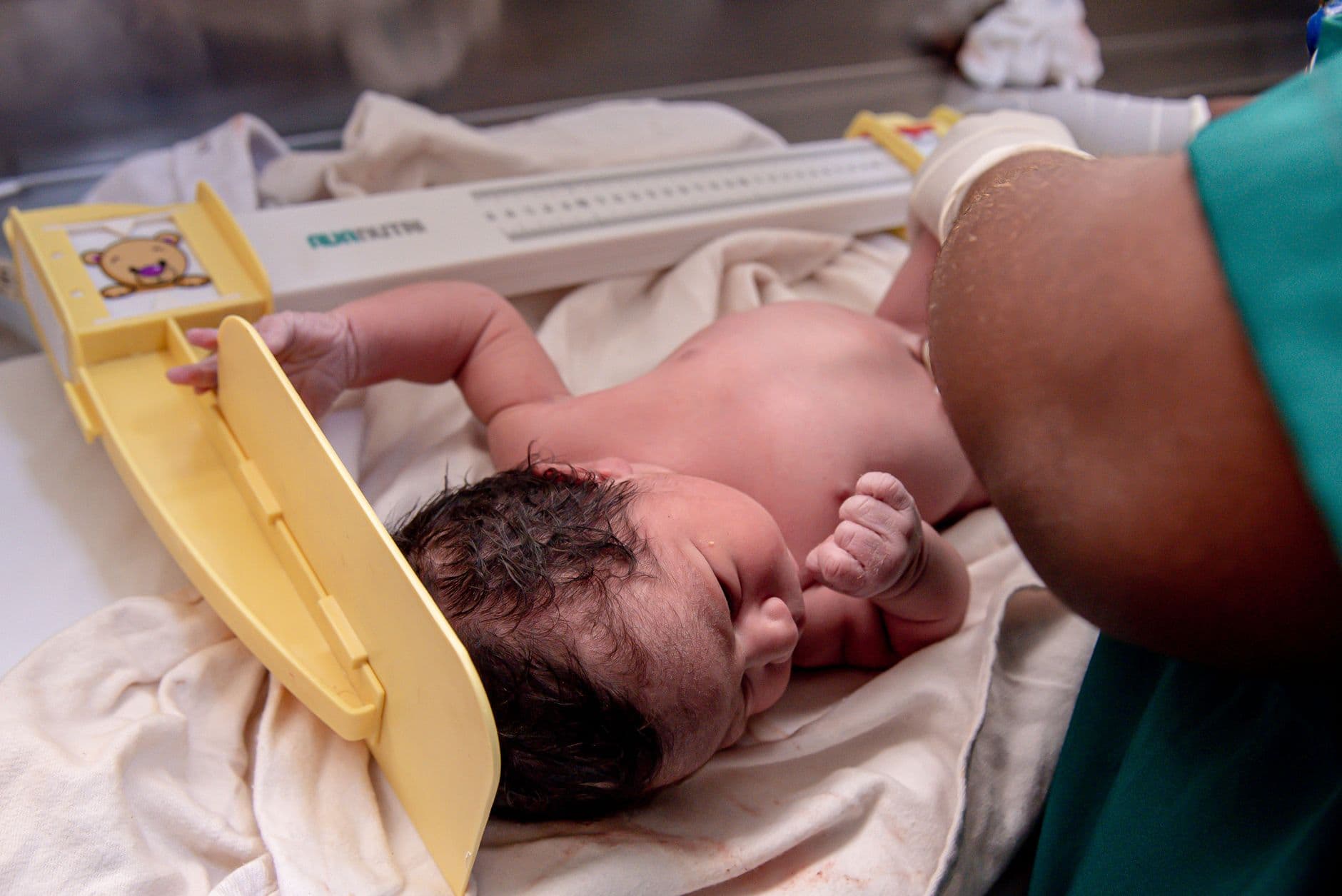
These tools are essential for assessing the infant's health status and making informed clinical decisions. They include Class III electronic baby scales for precise growth monitoring, non-contact infrared thermometers for quick and hygienic measurement, and pediatric pulse oximeters. The reliability of these devices is critical, as it determines diagnoses and therapeutic adjustments.
Hygiene and routine care devices
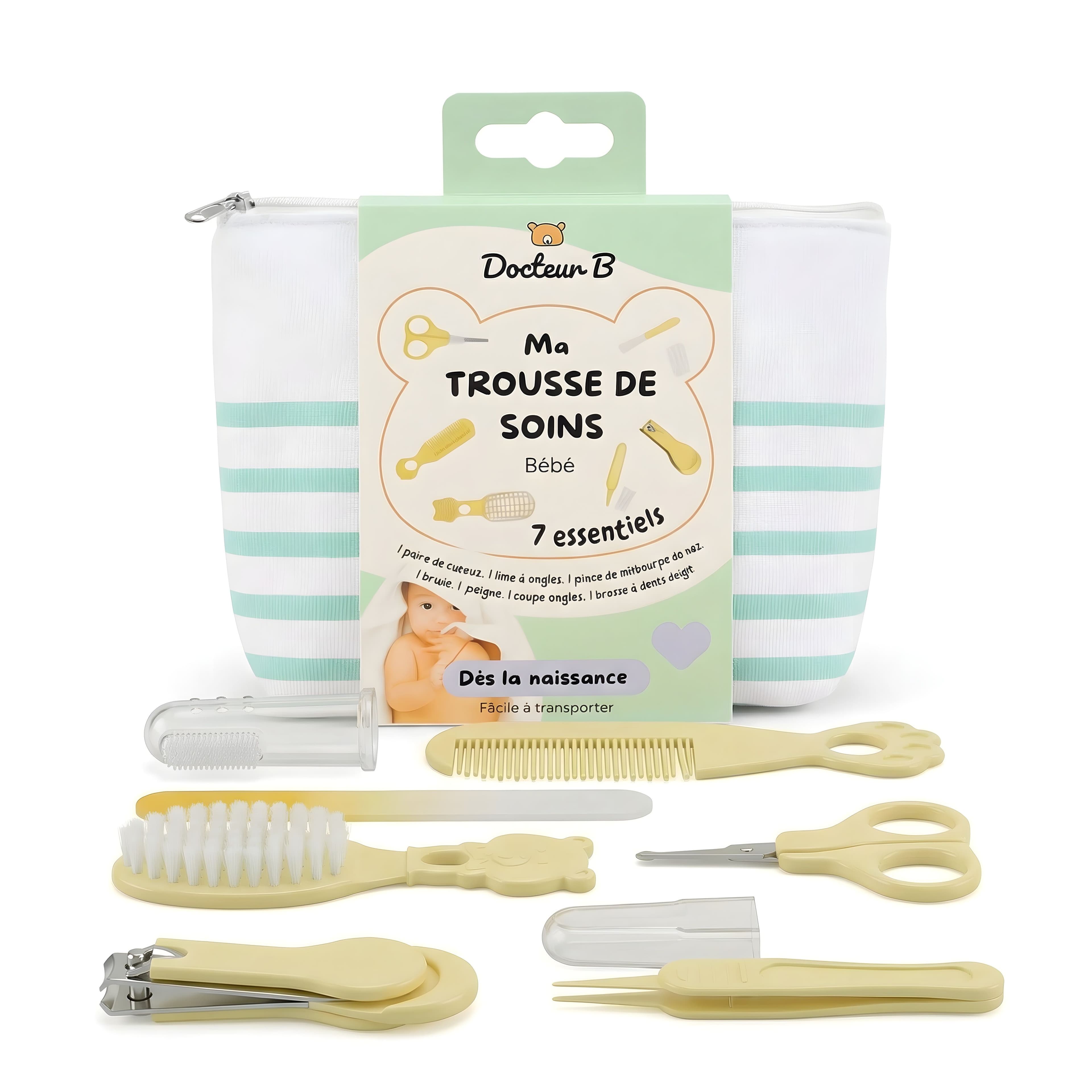
Rigorous hygiene is the first barrier against infections, especially for the most fragile. This category includes professional changing tables made of non-porous and easy-to-disinfect materials, medical-grade nasal aspirators to clear airways, and complete care kits. The latter include ergonomic and safe instruments (round-tipped scissors, soft brush) for daily care.
Feeding and medication administration devices
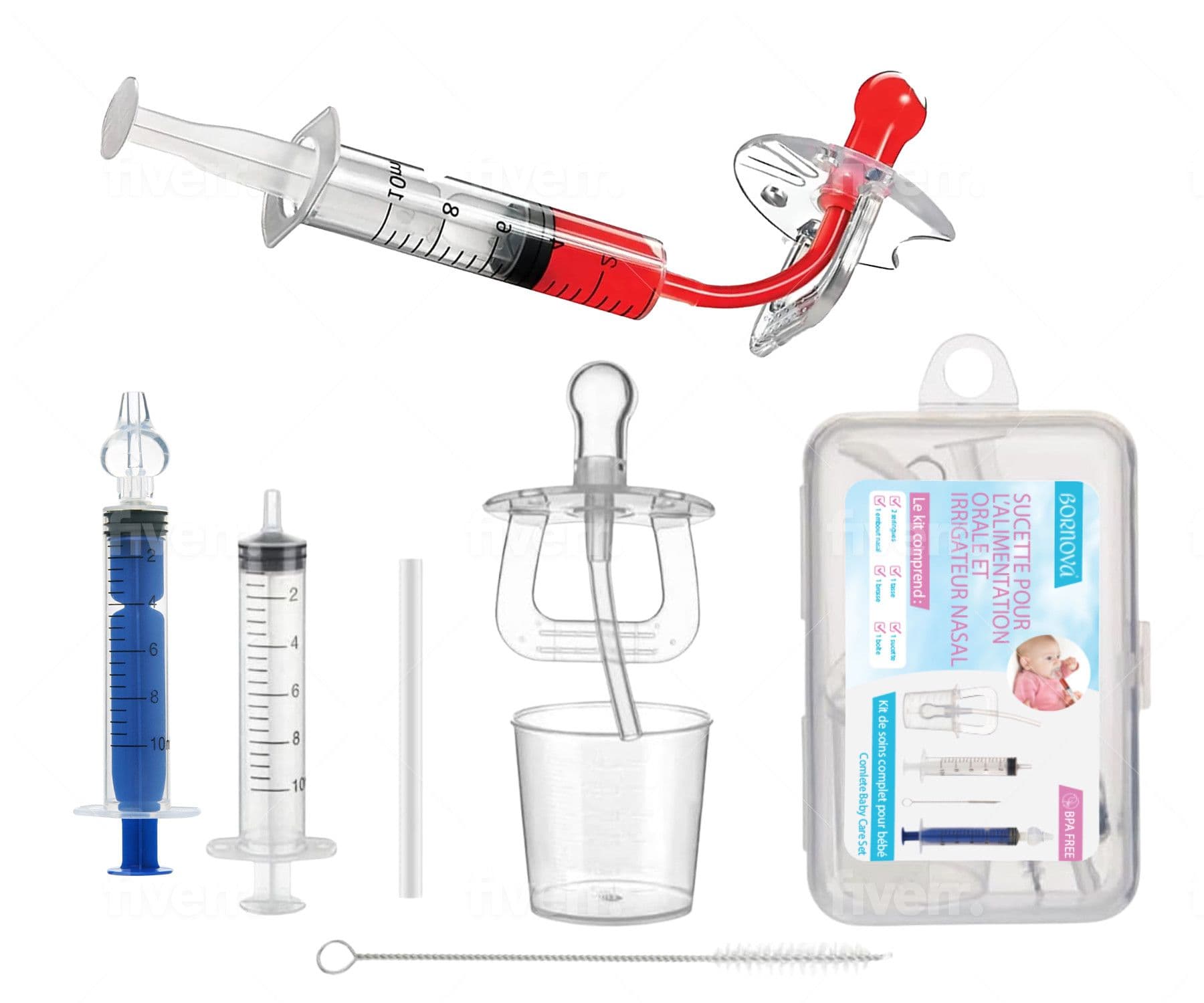
Precision here is non-negotiable to avoid any overdose or underdose. This category includes specific baby bottles (anti-reflux, for cleft palate) and innovative devices like the pacifier-syringe, which allows precise and safe oral administration of medications. These tools ensure correct dosage while minimizing the risk of aspiration.
The 4 key criteria for choosing a baby care device
To choose a pediatric device well, four criteria are paramount: material safety, ergonomics, ease of disinfection, and metrological precision. These elements guarantee patient safety, regulatory compliance, and clinical performance.
1. Material safety and biocompatibility
Ensure that materials in contact with the baby are free from harmful substances such as bisphenol A (BPA), phthalates, or latex, which can be endocrine disruptors or allergens. Robustness is also crucial to withstand intensive use and repeated disinfection cycles.
2. Ergonomics and ease of use
An intuitive and ergonomic design reduces the risk of human error and optimizes caregivers' time. Factors such as weight, portability, or clarity of graduations and screens are essential. Well-designed equipment improves working conditions and care safety.
3. Hygiene and ease of disinfection
Equipment must be designed for effective decontamination, with smooth, non-porous surfaces resistant to hospital disinfectants. The ability to easily disassemble components for deep cleaning is a major asset for controlling infectious risk. To learn more, consult our complete guide on hygiene and disinfection.
4. Precision and reliability of measurements
For measuring devices (thermometers, scales, syringes), precision is non-negotiable. An erroneous measurement can lead to dangerous dosing. It is imperative to check certifications (e.g., Class III for scales), precision standards (e.g., ASTM E1965-98 for thermometers), and manufacturer tolerances.
Understanding standards and regulations (MDR, CE, ISO)
Regulatory compliance is non-negotiable. The main framework is Regulation (EU) 2017/745 (MDR), which imposes strict requirements for safety, performance, and traceability for all pediatric medical devices [S6]. As a buyer, you must systematically verify that products bear the CE marking and that the manufacturer provides complete documentation. The ISO 13485 standard is an additional guarantee of quality, indicating a robust management system at the manufacturer. Compliance with these standards is a legal responsibility for your establishment, ensuring the safety of patients and staff [S7].
Comparison of pediatric care devices: Bornova selection
To help you choose, here is a comparison of several devices from our catalog, based on key criteria for professional use. It highlights essential features to guide your decision.
| Product | Clinical / Professional Use | Compliance | Key Asset | Packaging / Format |
|---|---|---|---|---|
| Docteur B Baby Care Kit | Provision of a standardized hygiene kit for daily care (nails, hair, nose). | CE marking | Complete and ergonomic 7-in-1 set. | Unit kit |
| BORNOVA Pacifier-syringe | Safe and precise oral administration of liquid medications or food supplements. | CE marking | Reduces the risk of aspiration and infant refusal. | Unit device |
| Docteur B 100% Organic Baby Cotton | Daily hygiene care (cleaning the bottom, face, eyes) with a hypoallergenic material. | CE marking | 100% organic cotton, not chlorine-bleached. | Bag of 180 squares (8x10 cm) |
| Docteur B No-Rinse Baby Cleansing Water | Gentle cleansing for sensitive infant skin, usable in the absence of a water point. | Cosmetic product | Hypoallergenic no-rinse formula. | 500 ml bottle |
Beyond the purchase price: evaluating organizational and economic impact
The choice of a device is not limited to its purchase price; its total cost of ownership (TCO) and its impact on your organization must be analyzed. As highlighted by the HAS, this analysis must include the costs of consumables, maintenance, and staff training [S2]. A cheaper device to buy can prove more expensive in the long run. Also anticipate its integration into your care protocols: does it simplify the work of caregivers? Continuous training is also a key factor in ensuring correct and safe use, in line with professionals' certification obligations [S8].
4 mistakes not to make when purchasing pediatric equipment
Avoiding certain common mistakes when purchasing pediatric equipment is essential to ensure patient safety and the effectiveness of your services. Here are the main ones:
- Focusing solely on the purchase price and ignoring the TCO (total cost of ownership), which includes maintenance, consumables, and training.
- Not consulting nursing teams (nurses, childcare workers), who are the end-users and whose opinion is crucial for equipment adoption.
- Neglecting to verify regulatory compliance (MDR, CE marking), which exposes the establishment to legal and health risks.
- Underestimating the importance of training and technical support offered by the supplier to ensure correct and safe use.
Bornova: your partner for quality pediatric care devices
Bornova understands the challenges faced by healthcare professionals. We are committed to providing pediatric care devices that comply with the strictest regulations (MDR, CE) and are adapted to your practical and budgetary constraints. Our expertise supports you in making a relevant and safe choice. By choosing us, you opt for a reliable partner who guarantees the traceability and quality of your equipment. You can thus concentrate on your core business: the safety and quality of care provided to the youngest.
Frequently Asked Questions
What are the priority criteria for choosing a baby care device in a hospital setting?
The priorities are: regulatory compliance (CE marking, MDR), material safety (biocompatible, BPA-free), ease of disinfection to prevent infections, precision of measuring devices, and ergonomics to simplify caregivers' work and reduce the risk of error.
How does the new European regulation impact the purchase of pediatric medical devices?
The MDR 2017/745 regulation strengthens requirements for clinical evidence, post-market surveillance, and traceability. For buyers, this means increased vigilance: you must demand proof of this compliance from suppliers to ensure a higher level of safety and performance [S6].
What are the essential devices for a neonatology or pediatrics unit?
A pediatrics or neonatology unit needs reliable devices such as precision baby scales (Class III), non-contact thermometers, vital signs monitors, medical-grade nasal aspirators, and secure medication administration systems like pacifier-syringes to ensure accurate dosages.
What are the common mistakes to avoid when acquiring professional childcare equipment?
The main mistakes to avoid are: focusing solely on the purchase price while ignoring the total cost of ownership (TCO), not involving nursing staff in the choice, not verifying regulatory compliance, and underestimating the importance of training in the use of the equipment.
Sources
- Haute Autorité de Santé - Mieux évaluer les impacts organisationnels des technologies de santéhas-sante.fr
- Ce que change la nouvelle réglementation pour les patients et les professionnels de santésnitem.fr
- Réglementation de sécurité sanitaire dans les établissements de santé - Ministère de la Santé, de la Famille, de l'Autonomie et des Personnes handicapéessante.gouv.fr
- La certification périodique des professionnels de santé - Ministère de la Santé, de la Famille, de l'Autonomie et des Personnes handicapéessante.gouv.fr
Recommended products
Docteur B — Baby care kit, 7-in-1 pediatric hygiene kit
BORNOVA — Infant Oral Administration Nipple-Syringe
Continue reading

 Désinfection Hospitalière
Hospital Disinfection: Optimizing Protocols Through Risk-Level Zoning
Optimize hospital disinfection and reduce healthcare-associated infections with risk-level zoning (NF S 90-351 standard). Our comprehensive guide details the 4 zones, protocols, equipment, and controls to ensure patient and staff safety.
 Sérum Physiologique
Bulk Saline Solution: A Professional Guide to Safe Procurement
Secure your B2B supply of saline solution. Our guide helps you assess regulatory compliance (MDR, CE), choose a reliable supplier, and manage batch recalls for patient safety.